Illuminated shopfront signage often fails to deliver the visibility and reliability businesses expect. You could spend weeks planning, only to end up with signs that dim unevenly or require costly repairs. This guide cuts through technical jargon to help you specify signage that stays bright, withstands wear, and runs smoothly day after day.
Illuminated Shopfront Signage Essentials
When planning illuminated shopfront signage, a few key elements ensure your signs stand out and last long. Understanding these can help you avoid common pitfalls and keep your signs as reliable assets.
Ensuring Sign Visibility
Your signage needs to grab attention instantly. The right materials and design play a crucial role in visibility. Consider using LED signage as they are brighter and consume less power. Choose face-lit letters or halo-illuminated letters to make your sign shine day and night. The placement of your signs should also avoid obstructions. Mounting at eye level ensures they’re seen by pedestrians and drivers alike.
Durable Signage Materials
Strong materials mean longevity. Aluminium sign trays and acrylic opal 030 are excellent choices for durability. They resist weather damage, ensuring signs stay robust over time. Use translucent vinyl for clear, vibrant displays. Regular checks prevent wear and tear, avoiding costly replacements. By investing in quality materials now, you save time and money in the long run.
Day-to-Day Sign Reliability
For continuous operation, consider the technical elements of your signage. A photocell timer can help automate lighting, turning your signs on and off with ease. Dimming controls offer flexibility, saving on energy costs during non-peak hours. Ensure your signs have easy maintenance access to quickly resolve any issues. Reliable signs keep your business visible, even during unexpected outages.
Designing for Consistent Brightness
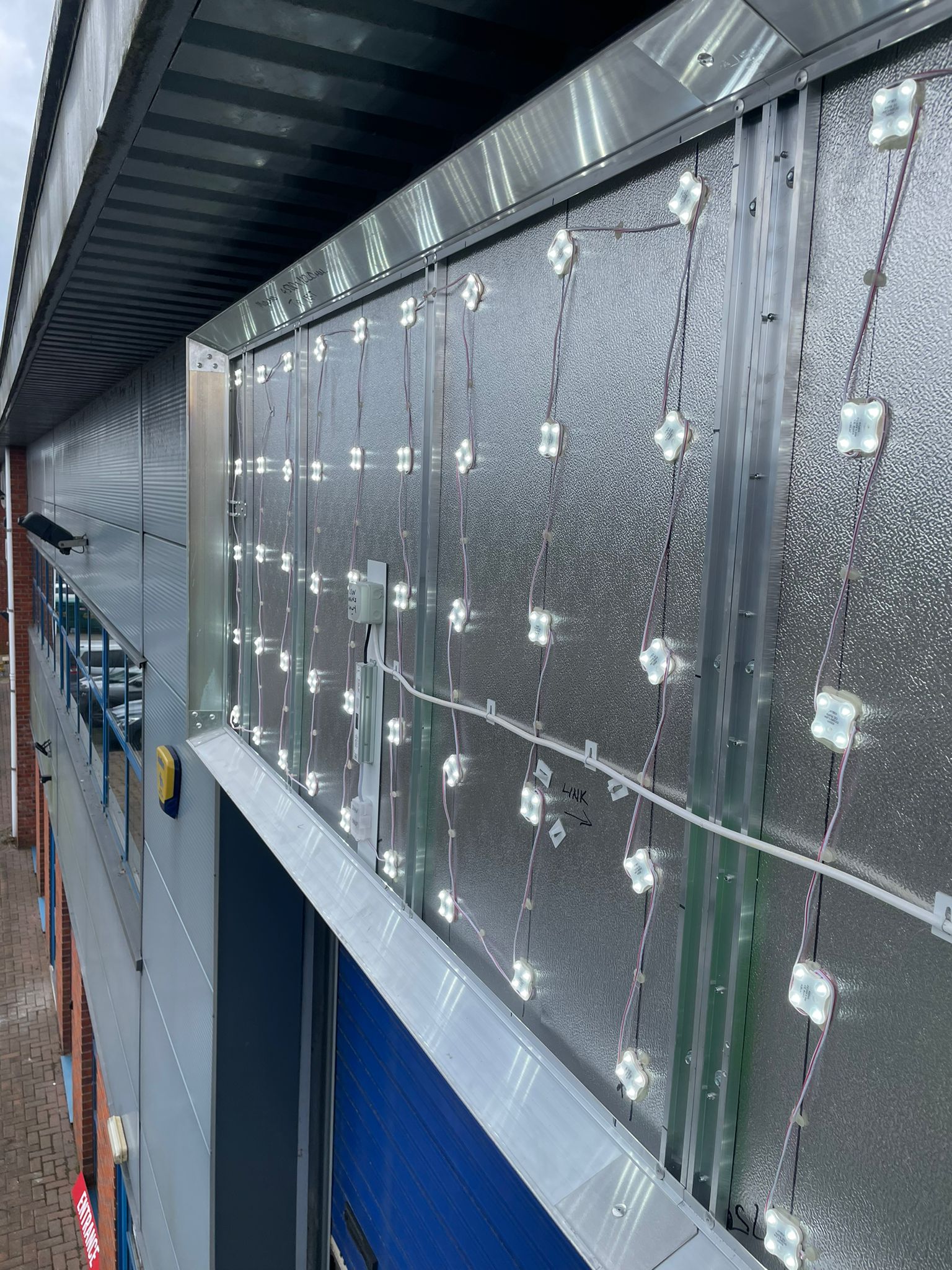
Achieving consistent brightness across your signs is key for a professional look and feel. Let’s explore how to maintain this consistency.
Understanding Luminance Targets
Luminance refers to the brightness of your signage. Set clear luminance targets to ensure your signs are visible both day and night. Properly calibrated lighting highlights the details of your design. Brightness consistency across all sign components prevents uneven lighting, which can confuse or mislead viewers.
Achieving Uniform Light Distribution
Uniform light distribution is crucial for clear communication. Use energy-efficient signage solutions like LEDs for even light spread. Proper spacing of light sources within your sign ensures no dark spots or overly bright areas. This uniformity enhances readability and reinforces your brand’s message clearly and consistently.
Colour Temperature and CRI
Colour temperature affects how the eye perceives light. A colour temperature of 4000K is ideal for natural white light, making your signage easy on the eyes. The CRI (Colour Rendering Index) 80+ ensures colours appear vibrant and accurate. These specifications help your signs grab attention and communicate effectively.
Reliable Signage Construction
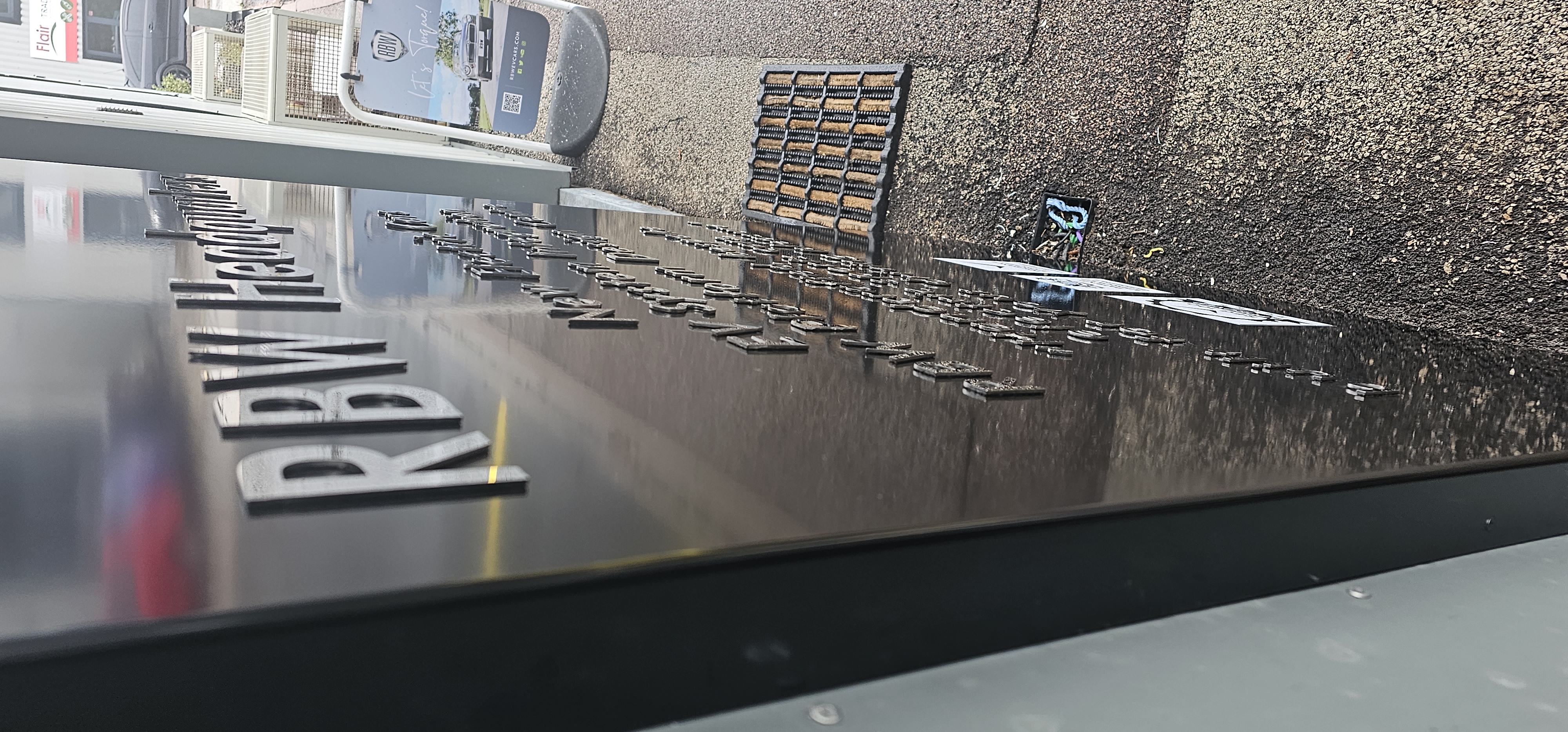
Building your signage the right way ensures it withstands everyday challenges. Here’s how to construct signs that last.
Choosing the Right Lighting Solutions
Selecting the best lighting solutions impacts both cost and effectiveness. LED signage offers a cost-effective option with a long lifespan. Lightbox signs provide brilliant illumination for maximum visibility. Each option should be considered based on specific requirements, such as location and exposure to elements.
Electrical and Thermal Considerations
Proper electrical setup is vital for safety and efficiency. Ensure compliance with standards like BS 7671 to avoid electrical hazards. Thermal management is also key; overheated components can lead to failures. Address thermal concerns during the planning phase to ensure reliability and longevity.
Protection and Compliance Standards
Adhering to protection standards ensures your signs withstand environmental forces. IP65 signage and IK rating offer resistance to dust and impact. Compliance with UKCA and RoHS standards guarantees that your signs meet the necessary safety and environmental regulations. Meeting these standards protects both your investment and your brand reputation.
Frequently Asked Questions
What materials are best for durable shopfront signage?
For durable shopfront signage, aluminium sign trays and acrylic opal 030 are top choices. These materials withstand weather damage, ensuring your signs last longer without needing frequent repairs.
How do I ensure my signage has consistent brightness?
To maintain consistent brightness, use energy-efficient LEDs and properly space light sources. This setup prevents uneven lighting, ensuring your signs communicate effectively both day and night.
What is the ideal colour temperature for illuminated signs?
A colour temperature of 4000K is ideal for illuminated signs. It provides natural white light, making your signage easy on the eyes while ensuring colours remain vibrant and true.
How can I automate my signage lighting?
Automate your signage lighting with a photocell timer. This device turns your lights on and off based on daylight, optimising energy use and ensuring your signs are visible when needed.
What compliance standards should my signage meet?
Your signage should meet compliance standards like UKCA and RoHS. These ensure your signs adhere to safety and environmental regulations, protecting your investment and reputation.
GeT intouch